12:16 PM Leading Strategies For Efficient Server Room Management |
|
Managing a technical hub requires a combination of technical precision and strategic foresight to ensure that business operations remain uninterrupted. Comnet provides extensive support to companies in Singapore, focusing on the meticulous design and installation of server rooms where all low-voltage and data networks function together reliably. Neglecting the core foundation of an IT system often leads to significant downtime, as messy wiring and poor planning eventually cause equipment failure or safety risks. It is essential to adopt practical strategies to keep these technical spaces tidy, secure, and fully optimised for daily performance. Structured cabling and proactive maintenance are not merely about aesthetics but are critical for preventing performance drops caused by poor airflow. By implementing professional standards from the outset, businesses can avoid the common pitfalls of ad-hoc growth and ensure their infrastructure remains a dependable powerhouse for the future. Key Takeaways:
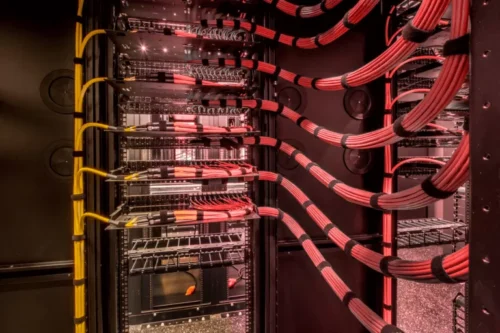
The Value Of Structured Cabling DesignsResorting to ad-hoc cabling as an organisation expands is a frequent error that leads to unsightly results and unstable operations. While such a makeshift approach might appear manageable in the short term, it eventually creates an environment where diagnosing technical issues is incredibly difficult. Professional structured cabling solutions in Singapore provide the necessary framework to manage wires professionally while ensuring the entire system is fully scalable for future requirements. An organised infrastructure offers the flexibility needed to add new devices or upgrade systems with absolute minimal business disruption. These designs often incorporate uninterruptible power supplies into the central design to protect critical hardware during various power events. By treating cabling as a core asset, firms gain a reliable system that simplifies maintenance and maintains high uptime levels for the long term. Improving Troubleshooting With DocumentationManaging a high volume of cables without a clear identification system is a primary cause of operational delay during network troubleshooting. There have been many cases where technicians have spent several hours tracing a single cable, which is an inefficient use of professional resources. Professional procedures must always include the creation of elaborate schematics and up-to-date diagrams of the entire cabling infrastructure. Accurate labelling at both ends of every single cable is a small but vital step that transforms the efficiency of the server room. With this information readily available, the IT team can identify specific issues with great speed and make necessary changes with ease. This commitment to thorough documentation ensures that network knowledge is preserved and that the facility remains easy to manage as it continues to grow. Thermal Control And Airflow ManagementRandom cables that plug up essential vents restrict the vital air movement required to keep high-performance equipment at safe temperatures. Overheating is a major risk that reduces performance and can permanently burn out expensive network switches and servers. It is therefore critical to keep pathways open so that the building's cooling systems can operate at their full potential. The most effective layouts utilise cable trays, racks, and various horizontal or vertical organisers to maintain open airflow. Properly organised cabling ensures that it does not obstruct the vents, which prolongs the life of the IT hardware. Clean cabling combined with good cooling practices creates an environment where high-speed performance is maintained consistently. Eliminating Signal Interference And DisturbanceRunning data and power cables in the same conduits can lead to electromagnetic interference, resulting in significant network instability. This is a frequent mistake encountered in server rooms that have not followed professional best practices during the initial installation. Part of best practices is to keep power and data cabling physically separated to avoid signal noise and maintain consistent transmission. This separation is particularly important when routing cabling for sensitive equipment, such as an access control system or CCTV cameras. High-quality shielding materials should be used where possible to further ensure that systems perform well without excess signal disturbance. Preserving the integrity of these signals ensures that security and communication systems remain reliable and responsive for building safety.
Professional Management Tools And ScalabilityExpedient solutions like duct tape or standard zip ties might work in the short term, but create significant problems for long-term hardware servicing. Tangled cables become extremely troublesome when the time comes to replace, service, or upgrade hardware. Professionals rely on industry-standard equipment such as Velcro straps, patch panels, and racks to maintain accessibility and order. Long-term scalability must be addressed from the initial design phase to prevent the need for expensive renovations as the company expands. Future expansion opportunities should always be taken into account by including spare capacity and using high-bandwidth cabling. This forward-thinking approach allows for the rapid integration of new technology with minimal friction and keeps rewiring costs low. Safety Standards And Maintenance ProtocolsServer rooms contain numerous hazards, including fire possibilities, electrical overloads, and physical slips if cable management is poor. Safety should always be the primary consideration when designing or maintaining these high-risk technical areas. Professional solutions always involve conforming to local safety requirements and following stringent regulations to reduce these potential hazards. Periodic maintenance inspections are essential even for the most advanced systems to ensure they remain in an optimal condition. These audits include checking cable integrity, verifying connectivity, and inspecting uninterruptible power supplies to ensure backup systems are fully synchronised. Predictive maintenance is highly effective at preventing unwanted downtime and keeping the building infrastructure at peak levels at all times. FAQs1. Why is structured cabling better than ad-hoc wiring? It provides an organised system that allows for flexibility when adding new devices or upgrading systems with minimal disruption. 2. How often should server room cabling be inspected? Periodic inspections and maintenance audits are essential to check for dust, abrasion, and to ensure that backup power systems are functioning correctly. 3. What are the risks of poor airflow in a server room? Disorganised cabling can block vents, leading to equipment overheating, which reduces performance and can burn out expensive servers. 4. Why must data and power cables be kept separate? Physical separation avoids electromagnetic interference, which is critical for the signal integrity of sensitive systems like CCTV and entry controls. 5. What tools are recommended for professional cable management? Industry standards suggest using patch panels, Velcro straps, and dedicated racks to ensure cable accessibility and a tidy environment.
Read another Article: Ultimate Guide To Professional Building Entry Systems |
|
|
| Total comments: 0 | |